
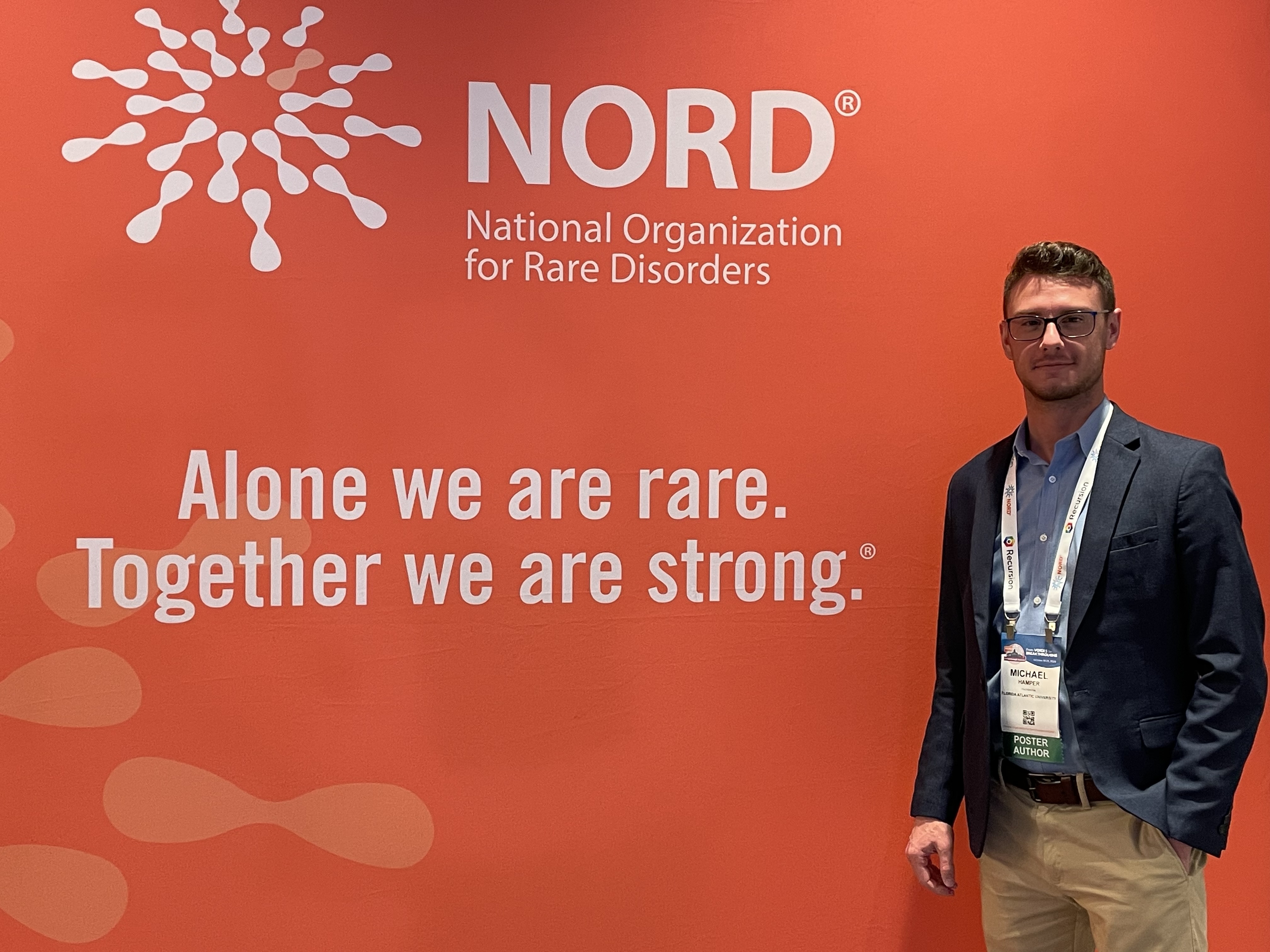
Student Perspectives on National Rare Disease Day by Michael Hamper, ACOM OMS-I
Kleine-Levin Syndrome is an extremely rare neurological condition that is characterized by recurring-remitting episodes of hypersomnia and severe cognitive abnormalities with behavioral changes.
There is only somewhere between 8,000 and 42,000 people in the world with the condition (based on the latest prevalence estimate). Unfortunately, while there are various factors that have been found to contribute to the condition, the underlying etiology has yet to be elucidated. There is also no definitive treatment.
Before I begin to speak on more personal experience, I want to provide context on the characteristics that I described. The cognitive abnormalities that occur during episodes of hypersomnia are what distinguish this condition from others that look similar. Such changes include severe derealization, memory loss, and disorientation. The criteria was updated in 2023 after over a decade without revision. I make this a point because it has been found that less than half of patients exhibit the characteristics previously used and are unfortunately still described in various resources. This includes our medical textbooks here which have outdated information on the condition, with respect to characteristics that are actually representative by the majority of patients and treatment. However, I contribute that to the lack of data that we now have, and I’m glad that Up-to-Date has much more accurate information. Thus, if anyone is interested in more, indexed literature from 2020-present and Up-to-Date is most reliable.
As for my own experience… I have always been a patient and guinea pig. By 15 I had one of the thickest files at my PCP’s office. From having developed epilepsy and kinesthetic cerebral palsy at a young age (years of physical therapy worked thankfully) to meningitis and Kawasaki’s disease and others, I still wasn’t prepared for being diagnosed with something that few people know about or have ever heard of, and knowing there’s no fix. That diagnosis was obtained after having to fly to Boston the day after the bombing, preceded by months of in-patient hospital stays, almost 10 spinal taps, endless scans, never ending labs and physical exams.
Something else that I’d like to share is that many patients, contrary to what some old literature and criteria would suggest, are not completely “normal” outside of exacerbations. Latest research has shown that this is likely due to notable changes in perfusion and metabolism in various areas of the brain, even between exacerbations. My own functional imaging has shown that as well. While from the outside I may look like I’m operating on the strengths and limitations as most of us do in school, I have to accept that my brain doesn’t function at the physiological capacity that it used to. There have been days that I’ve ensured I have made sure to come across completely normal with people at school, despite operating at 30% and shouldn’t have driven to school let alone not being able to prepare a meal at home, due to the cognitive changes that can still reside in-between exacerbations.
Since the age of 14, due to unpredictable and uncontrollable periods of time of being incapacitated, I’ve lost friends, missed vacations, graduations, birthdays, holidays, and a whole lot of school. And the mental/emotional impact of that isn’t talked about enough. However, once in college, I dedicated my time outside of class to becoming one of the most knowledgeable people of the condition by reading almost every single publication that comes out, have been a patient advocate, presented at conferences, and have now several publications in effort to contribute to the minimal research that is being produced on this condition.
I continue to speak to patients and their providers to educate and consult on the condition, continue research activity and should have another genetic paper out in the next year, and oversee a support group of a few hundred patients and families, all with the intention to give something to the rare disease space and this field that I didn’t have before.
There is already a deficit in medical education in rare diseases (for understandable reasons), and there are thousands of patients like myself that sometimes only get an accurate diagnosis because a provider had a lightbulb moment from a paper they read at some point. I pray that the next generation of providers remain up-to-date on the disease that they still might run into in their practice, which is something that I am fully committed to. There are over 20 million people in the U.S. with a rare disease, many that do not have a definitive treatment, elucidated cause, lack biomarkers, and those patients still need answers and help.